

From Residual to Vital: A Science Emerging from the Sewers
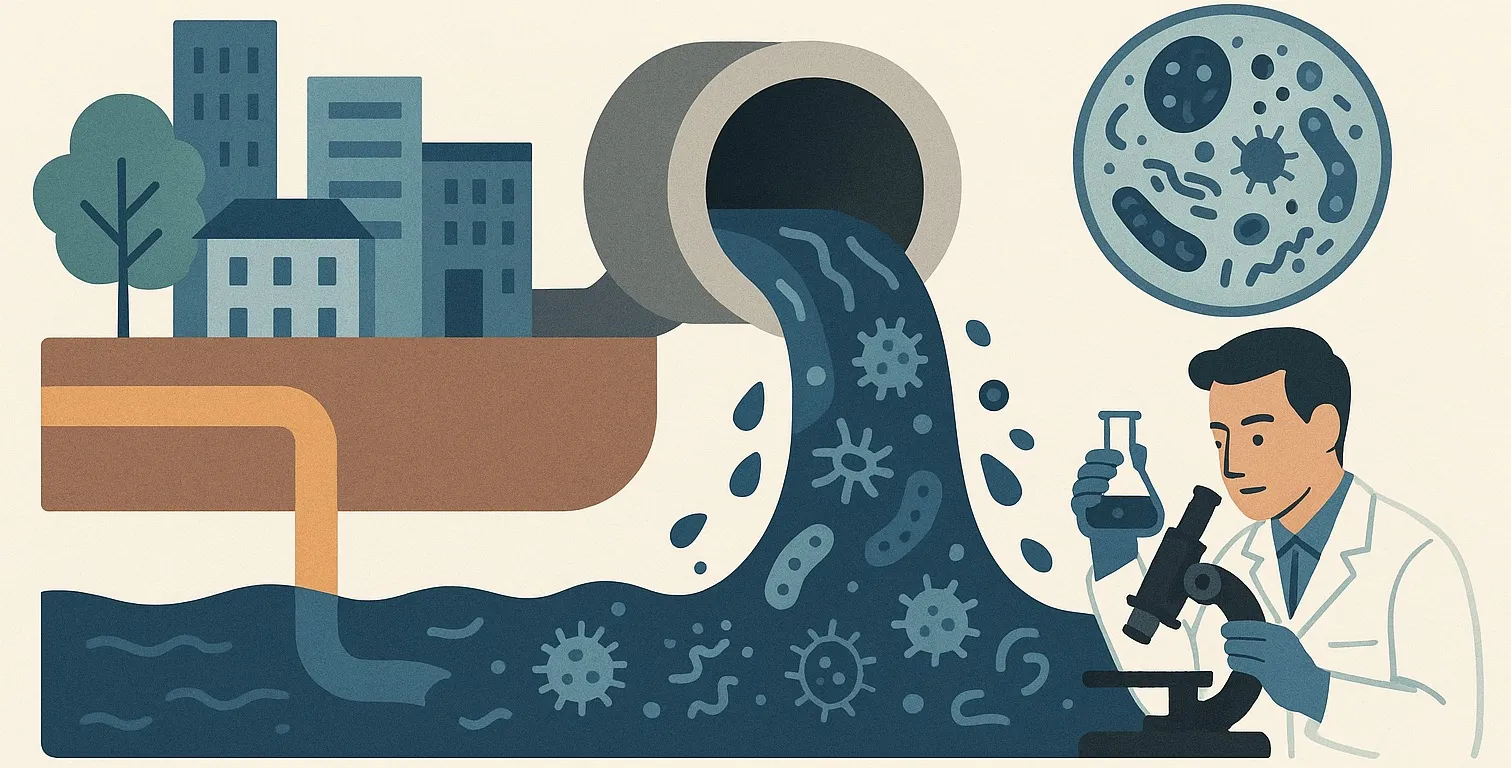
Figure 1. Wastewater reveals community health trends, from infectious diseases to antibiotic resistance.
Thousands of years ago
Thousands of years ago, humans developed wastewater channeling systems to move it away from cities, since we have long been aware of its potential to spread infectious diseases. Wastewater carries the excreta of an entire population, and with them, the bacteria that live in the human body: the microbiota.
The microbiota is like a community of tiny living things (mostly bacteria, but also viruses, fungi, and other microbes) that live in and on our bodies, especially in our gut.
Example: Imagine your gut as a big garden. The microbiota are all the plants and little creatures living in that garden. Some help the garden grow healthy (like helping you digest food or protect you from bad germs), while others can cause trouble if they grow too much.
That is why wastewater not only represents a contagion risk, but also a valuable source of information. It is like taking biological samples from an entire community at once. This perspective has given rise to an emerging field known as wastewater-based epidemiology, which allows for the monitoring and detection of infectious disease outbreaks in an effective and cost-efficient way. During the COVID-19 pandemic, this approach was used to monitor entire cities without the need for individual clinical testing, which facilitated public health decisions such as mobility restrictions.
Beyond emergencies
Beyond emergency situations like those experienced between 2020 and 2022, wastewater monitoring continues to be useful for tracking pathogens that are still circulating despite vaccine control, or for detecting the presence of genes associated with antibiotic resistance, a growing threat to global health. One of its advantages is the ability to adjust the sampling scale, which can range from intra-urban or even building-level monitoring to entire cities, allowing focus on key areas.
Surveillance techniques
The techniques used for microbiological surveillance are diverse, from classic microorganism cultures to more advanced molecular methods such as gene amplification or massive sequencing. These tools allow us to analyze in detail the microscopic life that has found its niche in sewer systems, turning what was once only waste into a powerful tool for epidemiological surveillance.
What do I do?
In my doctoral thesis, I research the set of antibiotic resistance genes present in wastewater from different communities.
Acknowledgments
Project PID2022-139446OB-C21 (EXPOWASTE)
Funded by MCIN/AEI /10.13039/501100011033 / and FEDER, UE